
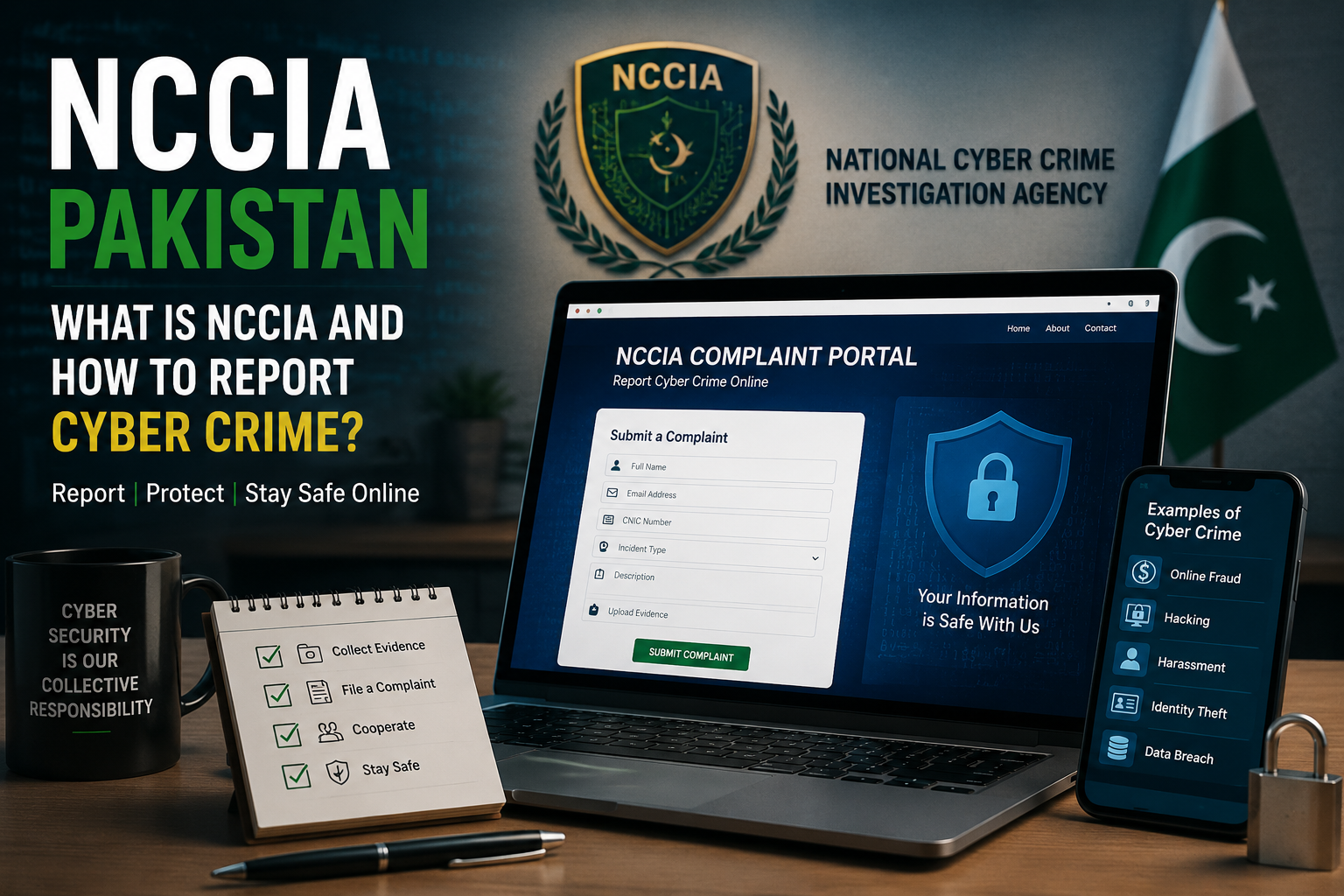
NCCIA Pakistan: What Is NCCIA and How to Report Cyber Crime?
Have you ever received a suspicious message, lost money through an online scam, or had your social-media account hacked? Pakistan Army Jobs 2026: Eligibility & Apply OnlineIn Pakistan, knowing where to report such incidents can make a big difference. NCCIA, short for National Cyber Crime Investigation Agency, is the government agency responsible for dealing with cybercrime investigations and related legal action in Pakistan.
The agency focuses on cyber investigations, digital forensics, prosecution and cybersecurity. According to its official website, NCCIA was established by the Government of Pakistan to address growing cybercrime threats and help create a safer digital environment.
In this guide, you will learn what NCCIA is, what types of cybercrime you can report, how the complaint process works, what evidence you should keep, and where you can get official help.
[IMAGE SUGGESTION: Illustration of a person reporting online fraud to a cybercrime agency. Alt text: “NCCIA Pakistan cyber crime complaint process”] NCCIA Pakistan: Full Form, Role & Complaint Guide
What Is NCCIA?
NCCIA stands for National Cyber Crime Investigation Agency. It is Pakistan’s specialized law-enforcement agency for cybercrime-related inquiries, investigations and prosecutions.
The agency operates under the legal framework associated with the Prevention of Electronic Crimes Act (PECA). The official NCCIA mandate states that it deals with technological abuse and has expertise in areas such as digital forensics, technical investigation, information-system security audits, penetration testing and training.
In simple words, if someone uses the internet, a computer, a mobile phone or another digital platform to commit a crime, the incident may fall within the type of cases handled by NCCIA.
What Does NCCIA Do?
NCCIA performs several important functions related to cybercrime.
Cyber Investigation
NCCIA investigates cybercrime complaints and works to identify and locate individuals involved in online crimes such as fraud, harassment and data breaches.
Digital Forensics
Digital forensics involves collecting, preserving and analyzing electronic evidence. This evidence can help investigators understand what happened during a cybercrime and support legal proceedings.
Prosecution
Cybercrime investigations can lead to legal action. NCCIA’s official description includes preparing and presenting cybercrime cases in courts.
Cybersecurity
NCCIA also focuses on preventing digital threats and protecting systems, networks and data from unauthorized access, attacks or damage.
What Types of Cyber Crime Can You Report to NCCIA?
Many different incidents can involve cybercrime. Examples include:
- Online financial fraud
- Hacking or unauthorized access
- Social-media harassment
- Online threats
- Identity-related digital fraud
- Data breaches
- Other forms of technology-related criminal activity
The exact legal treatment of an incident depends on the facts and applicable law, so victims should provide complete and accurate information when making a complaint.
Online Financial Fraud
If someone tricks you into sending money through an online platform, banking service or digital transaction, preserve the transaction details and other evidence.
Do not delete messages, screenshots or payment records before reporting the incident.
Social Media Harassment
Threatening or harassing messages on social-media platforms can be serious. Save screenshots showing usernames, profile links, dates and messages.
Hacking and Unauthorized Access
If someone gains unauthorized access to your account, change your password immediately where possible and enable two-factor authentication. Keep evidence showing suspicious login activity or unauthorized changes.
[LINK TO: Complete guide to online safety and account security]
How to File an NCCIA Complaint
If you become a victim of cybercrime, the official NCCIA FAQ currently lists several ways to report a complaint. These include the Pakistan Citizen Portal, the NCCIA complaint form, email and visiting a Cybercrime Reporting Centre.
Step 1: Collect Your Evidence
Before submitting your complaint, organize all relevant evidence.
This may include:
- Screenshots
- Chat messages
- Email conversations
- Phone numbers
- Social-media profile links
- Transaction receipts
- Bank or payment records
- Website or account URLs
- Relevant dates and times
The stronger and clearer your evidence, the easier it can be for investigators to understand the incident.
Step 2: Prepare Your Complaint
Explain what happened in a clear timeline.
For example:
- When did the incident happen?
- How did the person contact you?
- What information or money was involved?
- What account, phone number or platform was used?
- What evidence do you have?
- What action has already been taken?
Avoid adding assumptions that you cannot prove. Stick to facts and provide supporting evidence.
Step 3: Submit the Complaint
The official NCCIA website provides complaint-related information and a complaint form. Its FAQ also lists the NCCIA complaint portal as one of the reporting methods.
Official NCCIA website: NCCIA Pakistan
NCCIA complaint portal: NCCIA Complaint Portal
Step 4: Keep Your Complaint Details
After submitting a complaint, keep any reference number, confirmation, emails or other records you receive.
These details can be useful if you need to follow up about your case.
What Evidence Should You Keep for an NCCIA Complaint?
Evidence is one of the most important parts of a cybercrime complaint.
| Evidence Type | Example |
|---|---|
| Screenshots | Fraudulent messages or threats |
| Contact details | Phone number or email |
| Social profiles | Username and profile URL |
| Financial records | Transaction receipt |
| Emails | Original email conversations |
| Website information | Website URL |
| Account activity | Suspicious login notification |
| Timeline | Date and time of important events |
Important: Do not edit or manipulate evidence. Keep original files whenever possible.
NCCIA Offices in Pakistan
NCCIA has offices and reporting centres in different parts of Pakistan. The official website lists locations including Islamabad, Lahore, Karachi, Rawalpindi, Peshawar, Abbottabad, Dera Ismail Khan, Gilgit, Multan, Faisalabad and Gujranwala, among others.
Because office information can change, it is better to check the official NCCIA website before visiting an office.
[LINK TO: Pakistan cyber security guide]
NCCIA vs. Ordinary Cybersecurity
It is important to understand the difference between cybersecurity and cybercrime investigation.
Cybersecurity is mainly about preventing attacks and protecting accounts, systems and networks.
NCCIA, on the other hand, is concerned with law-enforcement activities involving cybercrime, including investigations, digital forensics and prosecution.
For example, using a strong password is a cybersecurity practice. Reporting someone who hacked your account and committed a crime is a cybercrime-reporting matter.
How to Protect Yourself From Cyber Crime
Reporting cybercrime is important, but prevention is equally valuable.
Follow these basic security practices:
- Use strong and unique passwords.
- Turn on two-factor authentication.
- Never share OTPs or verification codes.
- Avoid clicking suspicious links.
- Check website addresses before entering financial information.
- Do not send money to unknown people.
- Keep your phone and apps updated.
- Review privacy settings on social-media accounts.
- Keep evidence if you encounter suspicious activity.
- Be careful with unexpected investment, job or prize offers.
[IMAGE SUGGESTION: Cybersecurity checklist infographic. Alt text: “Cybersecurity tips to protect against online scams in Pakistan”]
Frequently Asked Questions About NCCIA
What does NCCIA stand for?
NCCIA stands for National Cyber Crime Investigation Agency. It is Pakistan’s specialized agency dealing with cybercrime-related investigations and legal action.
What is NCCIA Pakistan used for?
NCCIA Pakistan deals with cybercrime matters such as online fraud, harassment, hacking and other technology-related crimes. Its services include cyber investigation, digital forensics, prosecution and cybersecurity.
How can I file an NCCIA complaint?
According to the official NCCIA FAQ, complaints can be submitted through the NCCIA complaint portal, Pakistan Citizen Portal, email or by visiting a Cybercrime Reporting Centre.
What evidence is needed for a cybercrime complaint?
Useful evidence can include screenshots, messages, transaction records, phone numbers, email conversations, profile links and other digital records related to the incident. Keep the original evidence whenever possible.
Can I report online fraud to NCCIA?
Yes. Online financial fraud is among the types of cybercrime that may be investigated. Keep transaction records and communications related to the incident and provide accurate information with your complaint.
Is NCCIA responsible for cybercrime investigations in Pakistan?
The official NCCIA FAQ states that under Section 29(1) of PECA Amendment 2025, NCCIA is the authorized law-enforcement agency for inquiries, investigations and prosecutions concerning cybercrime.
Conclusion
NCCIA is an important part of Pakistan’s response to cybercrime. It deals with cyber investigations, digital forensics, prosecution and cybersecurity, while providing channels through which citizens can report cybercrime.
If you become a victim of online fraud, hacking, harassment or another cybercrime, don’t simply ignore it. Preserve your evidence, write down what happened and use the official NCCIA reporting channels.
For the latest complaint procedures, offices and contact information, always check the official NCCIA website before submitting or visiting an office.
CTA: If this guide helped you understand NCCIA, share it with friends and family so they also know where to turn when facing cyberc
Categories
- Cybersecurity
- Technology
Fact-check note: Official NCCIA sources were used for agency functions, complaint methods, legal mandate and office information. Any statistics or claims added later should be independently verified before publication.